Skip to content

You and the people around you

You can be in a busy group chat and still feel alone. In the Connection theme you see who is around you, and who you would like a bit closer. Sometimes one text is enough to start.

Sound familiar?

  • You moved for work or study and hardly know anyone there yet.
  • You are in five group chats, but you don't know who you would call when things go wrong.
  • You often think of an old friend, but texting them out of the blue feels strange.
  • Everyone seems busy, so you don't want to bother anyone.

What you learn

Social connection

Social connection is the circle around you: housemates, colleagues, the people at your sports club. People you do things with and belong with. Missing that circle, say after a move or a new job? That often feels like social loneliness.

Emotional connection

Emotional connection is that one person, or a few, with whom you can be yourself. Someone you text straight away when a job turns you down, or after a rough day. Missing someone like that can feel lonely, even among lots of people.

What you do

These are the exercises in the app. Finish a step and the next one opens.

  1. Questions about connection

    Six short statements. Then you see where your connection is already strong, and where there is room to grow.

  2. Create your sociogram

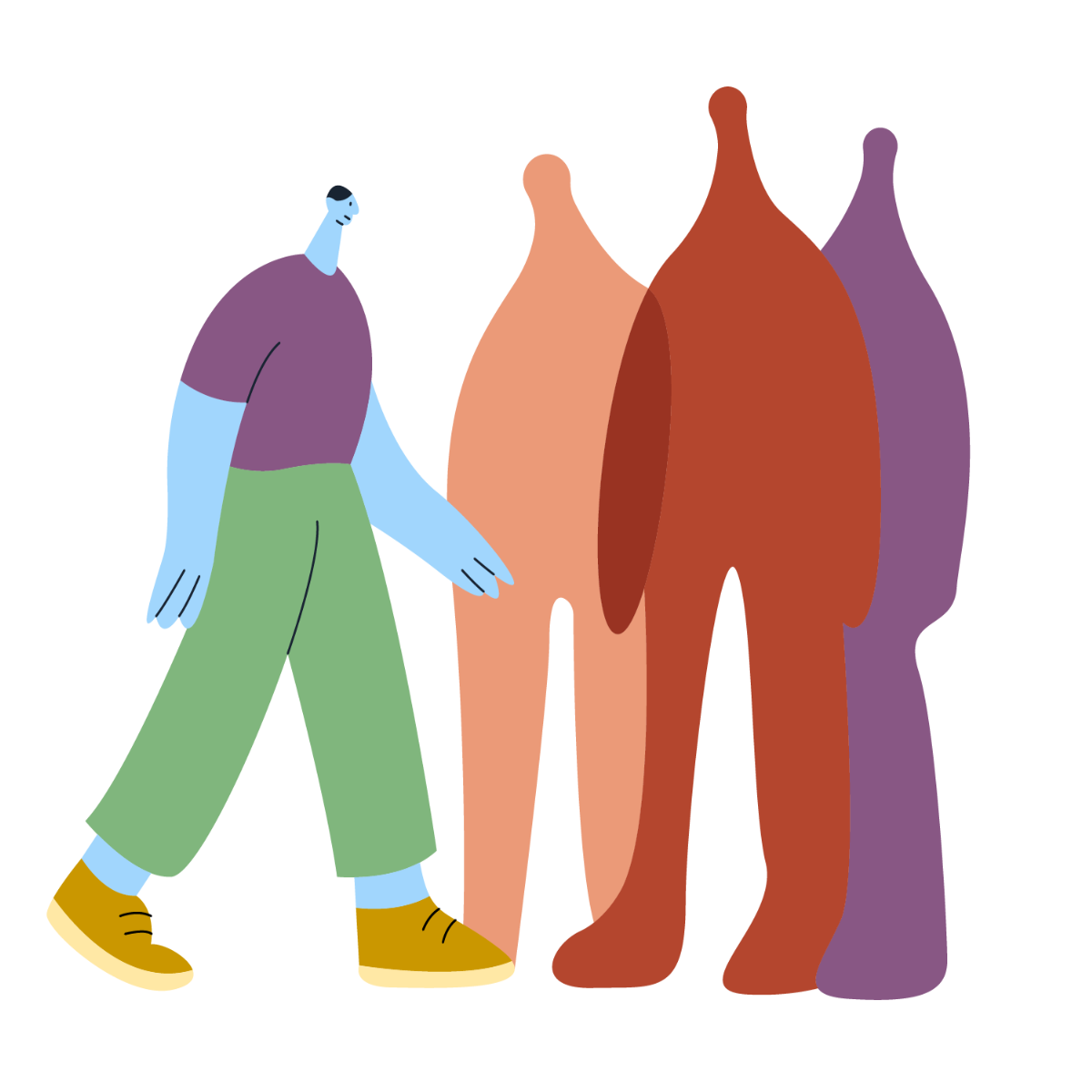
    Pick a group, like your family or your work. Place the people where they fit, by how close they feel.

  3. Adjust your sociogram

    Move people to where you would like them to be.

  4. One message

    Send one message to someone you would like to see a bit more often. Small, but it works.

  5. A thank-you

    Thank someone for something they once did for you. They read it on a card and let you know how it landed.

  6. Exploration

    Talk about your sociogram: who would you like closer, and what small step will you take this week?

What it is based on

Every exercise in the app comes from somewhere. In the app you find the research behind each exercise, with the source.

Social and emotional loneliness
Sociologist Robert Weiss distinguished social loneliness (too few people around you) from emotional loneliness (nobody who is really close). The Dutch De Jong Gierveld scale measures the two separately.
Circles of closeness
The circles come from Toni Antonucci's hierarchical mapping technique: you place people yourself, in rings around you, by how close they feel. It asks about felt closeness rather than numbers.
Reaching out
Across a series of experiments, people kept underestimating how much others appreciate an unexpected message. The more surprising the contact, the bigger the underestimate. That misjudgement is what keeps many messages unsent.
Saying thank you
In a controlled study, writing and delivering a thank-you letter gave people the biggest boost in happiness of all the exercises. It lasted a month. Other experiments show that people keep underestimating how glad the other person is with it.
How MindMoment works

MindMoment is an app for young adults who want to grow mentally stronger. You start with a few short questions. Then the app puts the themes in an order that suits you.

Available 24/7

Use the app whenever it suits you, at your own pace.

Your privacy first

You decide what you share, and with whom. We handle your data with care.

Step by step

A path of short exercises, and a deeper dive per theme whenever you want.

Together with your therapist or coach

On a waiting list, or already seeing someone? Then they can follow along in the app, if you want them to.

Read how that works

Really not doing well?

MindMoment is not a treatment. Are you really struggling right now? Call your GP, or talk anonymously to 113 on 0800-0113. You can, day and night.

Frequently asked questions

No, it is very common. It isn't about how many people you see, but whether there is someone you can be yourself with. In this theme you find out what is missing for you.

Get started

Download MindMoment and start with the theme that fits you right now.